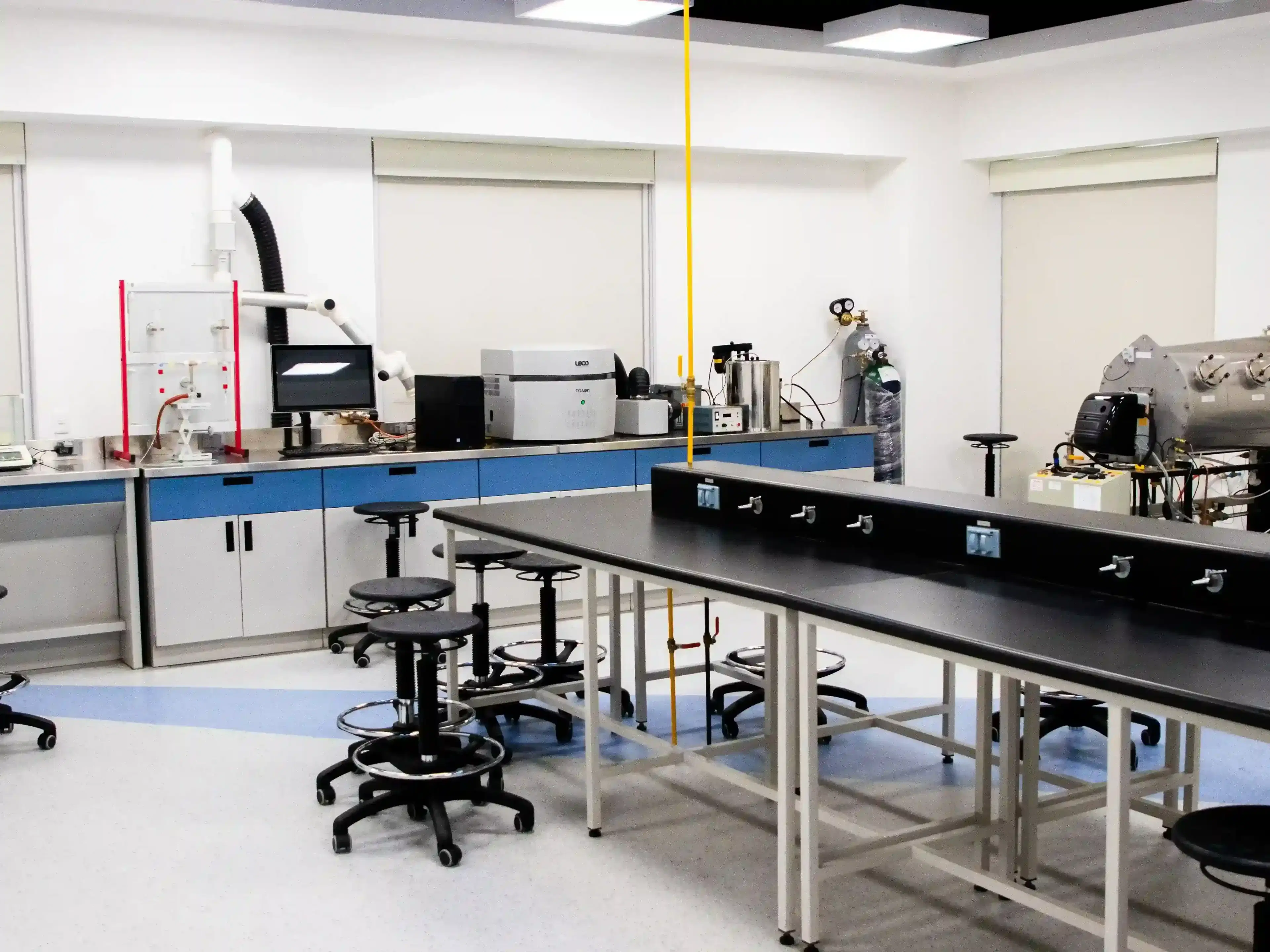


A bioprocessing LIMS is the system of record for the physical and analytical side of process development. It manages the samples, materials, process runs, assay results, methods, and specifications that move from upstream culture through downstream purification to release testing, recording what was made, from what, under which conditions, and whether it met spec.
This guide covers what a bioprocessing LIMS should manage, where it fits among the other systems, the integrations that matter, and how to choose between a commercial product, a configured platform, and a custom build.
What a bioprocessing LIMS should manage
The core job is turning a process run into records you can query, trend, and defend. A single run touches cell banks, media, a bioreactor, harvest, purification, and a panel of analytical tests, and each produces data that must link back to the run.
A bioprocessing LIMS should own:
- Samples and aliquots, with the chain from a parent through every split, transfer, and storage location.
- Materials and consumables such as media, buffers, resins, and cell banks, with lot numbers and expiry.
- Process runs and their context, so a titer carries the bioreactor, media lot, seed train, and conditions behind it.
- Assay results and the methods behind them, from titer and cell counts to high-performance liquid chromatography (HPLC) purity and endotoxin.
- Specifications and limits, so a result is checked against its range automatically, not by a person reading it.
- Traceability and audit history across a sample's full lifecycle.
You know it is set up right when you can trace a release result back to the cell bank, media lot, and run conditions without opening a spreadsheet. If the data model cannot hold process context, the LIMS becomes a results database and the context ends up somewhere less reliable.
Where the LIMS fits among the other systems
A bioprocessing LIMS does not hold every piece of process data. It sits alongside the ELN and historian, a process information management system (PIMS), a scientific data management system (SDMS), and eventually the MES, and where one ends and the next begins is a decision you make, not one the vendor pages make for you. The table below is the reference architecture we start from with development teams, not an industry standard, and deployments overlap in practice: an ELN can hold structured results and a PIMS can be a layer over a historian rather than a separate store. Pick the primary home for each record, then let the others reference it.
| System | What it holds | Where it fits in bioprocessing |
|---|---|---|
| LIMS | Structured samples, results, materials, specifications, traceability | The core record for development and quality control (QC) data |
| ELN | The experimental narrative: plan, observations, reasoning | Method development and the why behind each run |
| Historian | High-frequency time-series from sensors and controllers | Bioreactor pH, dissolved oxygen, temperature, agitation |
| PIMS | Contextualized process data across many runs | Trending and analysis once run volume grows |
| MES | Execution and electronic batch records | GMP (good manufacturing practice) manufacturing you run in-house |
| SDMS | Raw instrument files and their long-term retention | Chromatograms and spectra behind a result |
Two boundaries are where selection goes wrong. The first is the LIMS and the ELN, which we cover in our guide to the ELN and 21 CFR Part 11. The ELN captures why a run happened and what the scientist observed, the LIMS captures the structured output you query and trend, and the aim is one entry point per fact so a number is not typed into both.
The second is the historian and the LIMS. A bioreactor produces thousands of sensor readings a run, and that time-series belongs in a historian built for it, not the LIMS, which references the run and pulls the summary values it needs, such as peak cell density. Analytical results follow a different path: a titer comes from a method such as Protein A HPLC or a bio-layer interferometry (Octet) assay and enters the LIMS as a result. It can also be read online or at-line during the run, but the historian is not its source, and treating titer as something the historian owns is a common data-model mistake. An MES is a later question, if it comes up at all: it handles batch execution on the manufacturing floor, so buying one for development solves a problem you do not have, and teams that outsource manufacturing never run one.
The integrations that matter in bioprocess development
A bioprocessing LIMS is only as useful as what it connects to. Manual transcription between instruments and the LIMS is where errors and lost time collect, so the integrations you can build matter more than the feature list. The connections that matter in a development lab:
- Bioreactor and fermentation control systems, the source of the parameters and setpoints that give a sample its context.
- Chromatography systems on the purification side, where each step and its conditions attach to the material off the column.
- Analytical instruments such as HPLC, plate readers, cell counters, and mass spectrometers, so results are not re-keyed by hand.
- Process historians, which the LIMS references for time-series context rather than storing traces.
- Automation and liquid handlers, so registration and result capture keep up with higher-throughput screening.
- Reporting and analytics tools that pull cleaned data into a warehouse or statistical package, not a pile of exports.
Ask vendors how each connection is built and who owns it. An integration that runs on a vendor service contract for every new instrument is a different cost than one your team can extend through a documented API (application programming interface). When a configured product cannot go further on integrations, a custom build is one answer, but middleware, a vendor SDK, or a file-based connector can handle it without rebuilding the system, so weigh those first.
Commercial, configured, or custom
A bioprocessing LIMS comes three ways, though the categories overlap. Commercial means a packaged product with fixed workflows you adopt close to how they ship. A configured platform is a vendor-maintained or low-code foundation you shape yourself; since many products sold as commercial are configurable to a point, the real question is how far you can change the data model without the vendor. A custom build is software written for your process. Which fits depends on how unusual your process is, how many integrations you need, and how much validation work you can take on.
| Dimension | Commercial | Configured platform | Custom build |
|---|---|---|---|
| Workflow fit | Standard bioprocess workflows | Workflows that shift as the process settles | Unusual runs, sample types, or process logic |
| Integrations | Vendor's supported list | Configurable within the platform | Whatever an instrument exposes, built on your own code |
| Ownership | Vendor owns schema and roadmap | Shared, inside the platform's model | You own the code, within your contract and licenses |
| Change rate | Slower, tied to releases | You make many changes yourself | You control the roadmap |
| Total cost | License or subscription fees, plus lock-in | Platform fees plus your configuration effort | Build cost, then maintenance and support; no license fees |
| Validation burden | Vendor supplies qualification documents; you still validate for your use | Vendor base, plus you validate what you configure | You produce all validation evidence yourself |
Commercial fits when your process is standard and speed matters more than fit. A configured platform suits a team whose process is still moving and who needs to change assay templates and sample types without a service ticket each time; our guide to choosing a LIMS for biotech startups covers how to evaluate one. Custom is worth it when your runs cannot be modeled in a product, when you have outgrown one or two commercial systems, or when the platform is how you compete, covered in when to build a custom LIMS instead of buying one.
What to define before vendor demonstrations
Bring your own requirements to a demo. Without them, you judge the product on the version the vendor chose to show rather than on your own work. Before you meet vendors, write down:
- The data model, including how a run links samples, materials, results, and process context.
- Which instruments have to connect on day one and which can wait.
- How the system handles exceptions and out-of-specification results, not just the case where everything goes right.
- The audit history and permissions you need, by role, across development and QC.
- Deployment, APIs, and export formats, so you know how data gets in and out and who controls it.
- Whether your records fall under 21 CFR Part 11, based on the predicate rules that apply and how the electronic records are used, and the validation evidence that follows.
That last point decides how much compliance work you take on. Feeding data into an FDA submission does not by itself put a system under 21 CFR Part 11. Part 11 covers electronic records you must keep under a predicate rule, the underlying regulation such as GMP, and that you maintain and rely on electronically, so start with an applicability assessment of each record: what it is, which predicate rule requires it, and whether the electronic version is the one you rely on. FDA sets out this scope in its Part 11 scope and application guidance. Where it applies, you need validation, audit trails, and controls over electronic records and signatures, with broader good practice (GxP) expectations as you approach clinical manufacturing.
Whichever way you buy, responsibility for the system's suitability stays with you. A commercial or configured vendor can hand you qualification documents that reduce your work, but that does not transfer the obligation: FDA's inspection guidance on computerized systems in drug establishments expects the regulated company to hold validation records complete enough to judge the system, whoever wrote the software. A custom build means you produce that evidence yourself, so scope the effort from the start.
Turn this into a vendor-ready shortlist
Map your process before you shortlist software: the runs, the samples they produce, the instruments in the path, and the systems that already hold pieces of the data. Then decide which record the LIMS is the primary home for and which it references. That map tells you whether a commercial product fits, a configured platform is enough, or you need a custom build.
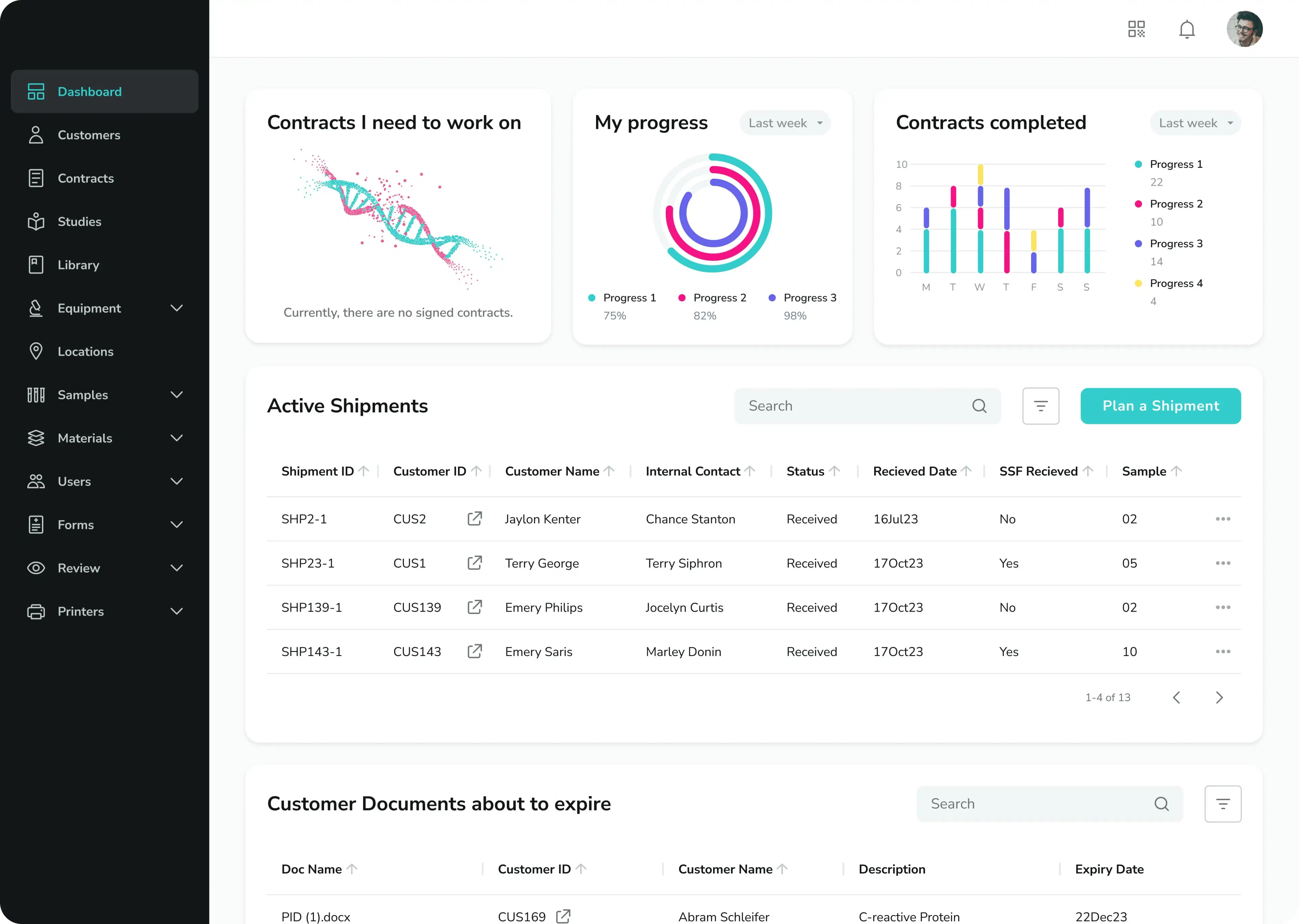
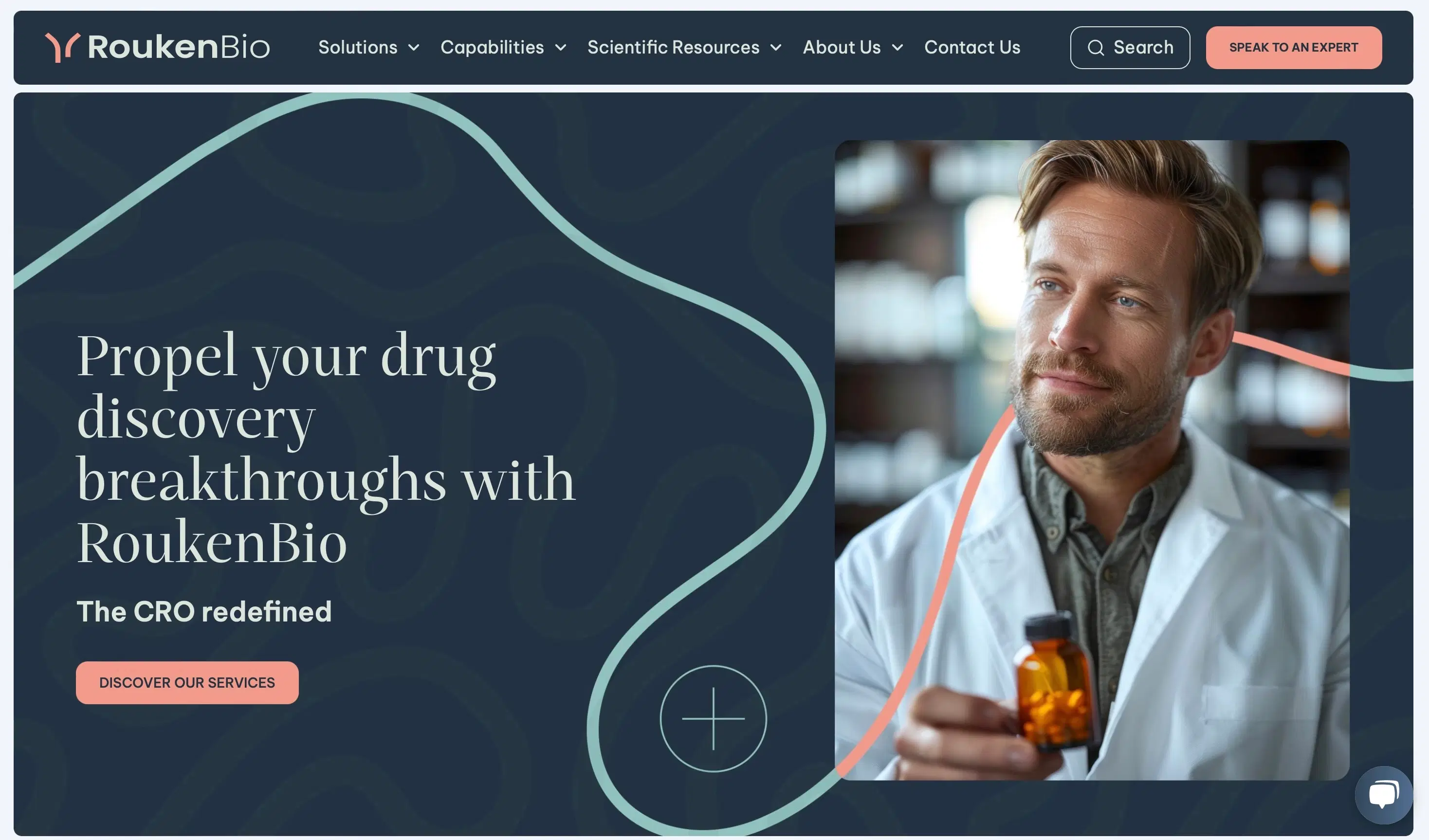
We build custom lab software for biotech and life sciences teams, including a bioprocess-heavy CRO. RoukenBio, a contract research organization in the UK with more than 100 employees, was running on a mix of outdated tools and manual processes that scattered data across disconnected systems. We built them a custom LIMS that pulled twelve-plus operational areas into one platform, covering versioned documentation, sample and shipment tracking, equipment scheduling, study lifecycle management, inventory, and audit trails with role-based access, and it now supports more than 100 users.
When you map your bioprocess stack, the RoukenBio case study shows what one custom lab platform looks like in practice. about where a LIMS should fit in your process and whether to configure or build.
Frequently asked questions
What is a bioprocessing LIMS?

A bioprocessing LIMS is the system of record for the physical and analytical side of process development. It manages samples, materials, process runs, assay results, methods, and specifications from upstream culture through downstream purification to release testing, recording what was made, from what, under which conditions, and whether it met spec.
How is a bioprocessing LIMS different from an ELN?
An ELN holds the experimental narrative: the plan, observations, and reasoning behind a run. A LIMS holds the structured records you query, trend, and audit. Development teams run both, and problems start when the boundary is undefined and the same data is entered in both by hand.
Does a bioprocess team also need a PIMS or an MES?
In development, a LIMS with an ELN and a process historian handles the work, the historian holding time-series from bioreactors and the LIMS holding samples and results. A process information management system (PIMS) helps once you need contextualized data across many runs, and a manufacturing execution system (MES) matters at GMP manufacturing, though teams that outsource it may never run one. Buying an MES for early development is premature.
When does a custom bioprocessing LIMS make sense?
Build custom when your runs, sample types, or instrument connections cannot be modeled in a commercial product, when you have outgrown one or two off-the-shelf systems, or when your lab platform is part of how you compete, as it is for a CRO. If a configurable platform covers your workflows and integrations, that is the faster and cheaper path.
Last updated: July 23, 2026