A funding round or a clinical milestone takes months of preparation, from the data to the deck to the investor meetings. The website usually gets whatever time is left over.
A biotech website is usually built at an early stage of the company, around the first version of its story. Then the company grows. A lead program appears, a board forms, the science gets sharper and the story changes with it. The website tends to stay where it was.
It is a common problem, and an understandable one. Before a milestone the team is busy with the milestone itself, which is how it should be. And changing the website usually means writing to whoever built it, waiting for a quote and then waiting for the change, so the update is left until the week before the announcement, or until after it.
Then the news goes out and people start reading. Investors open the website before the first call, and pharma business development teams read the science page after seeing the release on LinkedIn. They compare what they read with the deck and the press release, and when those disagree, they notice. The problem is worth solving before the date, and it is easier to solve than it looks.
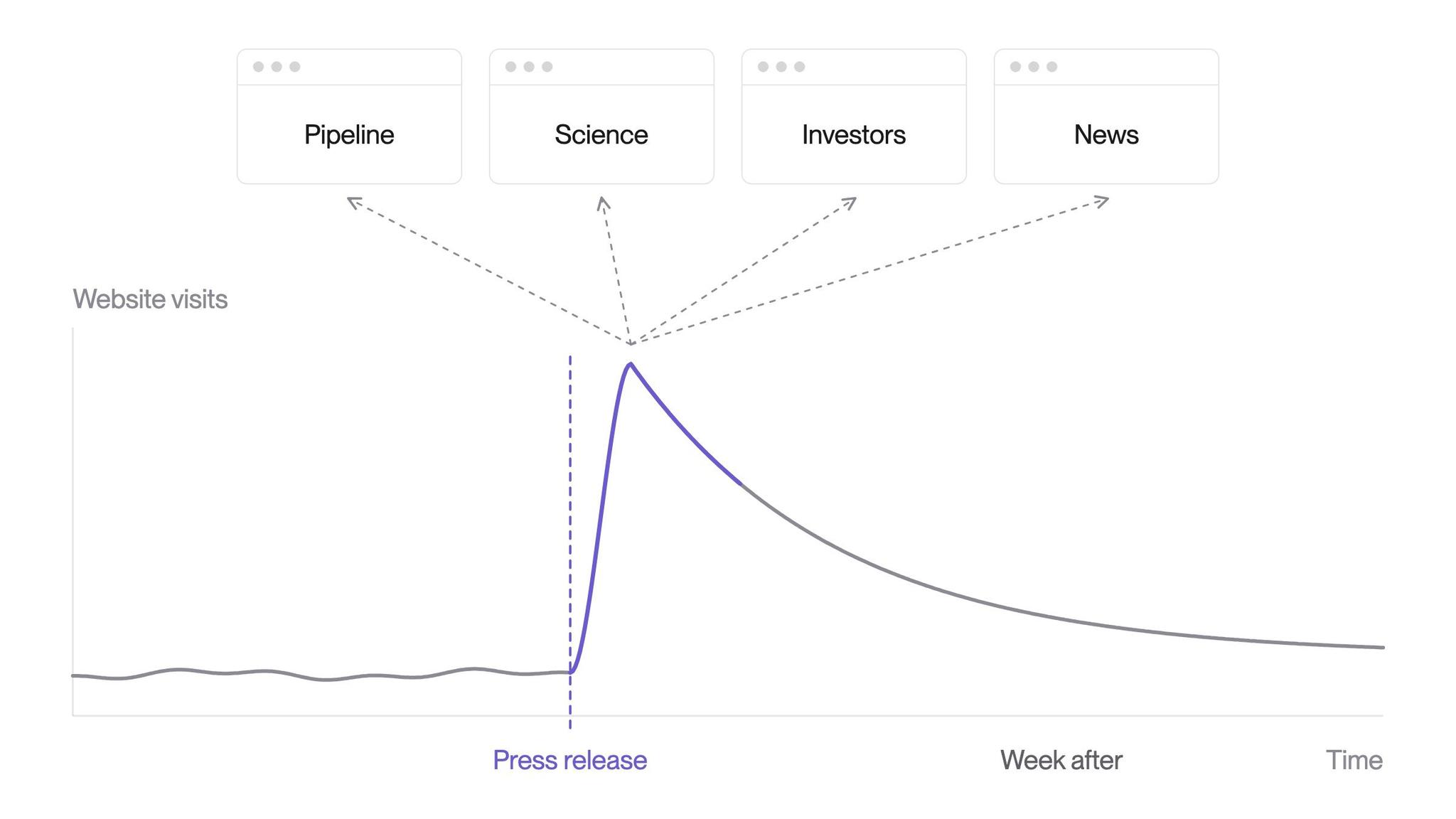
Each visitor comes for a different page.
- Investors go to the pipeline, the team and the list of who has already invested, to see that the company in the deck is the company on the website.
- Pharma business development teams read the science and look for the kind of partnership you are open to.
- Scientists read the mechanism and look for the papers behind it.
- Journalists want the release, a media contact and a picture they can use.
- Candidates who saw the news want to know whether this is a company worth joining.
After a clinical milestone there is another group, and it is the one companies forget. Patients and their families search for the trial. They need a short, plain page with a contact and a link to the registry record on ClinicalTrials.gov or the EU Clinical Trials Information System. They should not find medical advice there, and they should leave knowing who to ask.
This is the first decision, and it is worth making on purpose. An update keeps the structure of the website and changes what is on the pages. A redesign changes the structure, because the company has changed in a way the old pages cannot hold.
The test we use is simple. Put the new deck next to the website and imagine someone rewriting every page. If the current pages could tell the deck's story with new text, you need an update. If the story still would not fit, you need a redesign.
Update or redesign
| What to check | An update is enough when | A redesign is needed when |
|---|---|---|
| Story | The website tells the story the company tells investors | The story has changed, for example from a platform to a lead program, or to a new modality or indication |
| Pipeline | It is built from data the team can edit | It is an image exported from a slide |
| Editing | The team adds pages and news without a developer | Every change goes through the agency that built the website |
| Design | It looks like a company at your stage | It looks like an earlier, smaller company than the one raising the round |
| Audiences | It already serves the audiences the milestone brings | A new audience matters, such as pharma partners after positive trial results |
There is a middle option, and we recommend it more than people expect. If the story and the design still hold but the pipeline is a picture and the news section needs a developer, rebuild only those parts as content the team can edit. It takes a few weeks, and it fixes the part that matters on announcement day.
Both choices can go wrong. A redesign started 4 weeks before a raise because the website felt old launches late or not at all. New text added to pages that tell the old story leaves visitors reading 2 stories at once. Decide which one you need before you pick a date.
Almost every milestone changes the same parts of the website: the pipeline, the team and investor pages, and the science pages. The news section changes too, and it gets a section of its own further down.
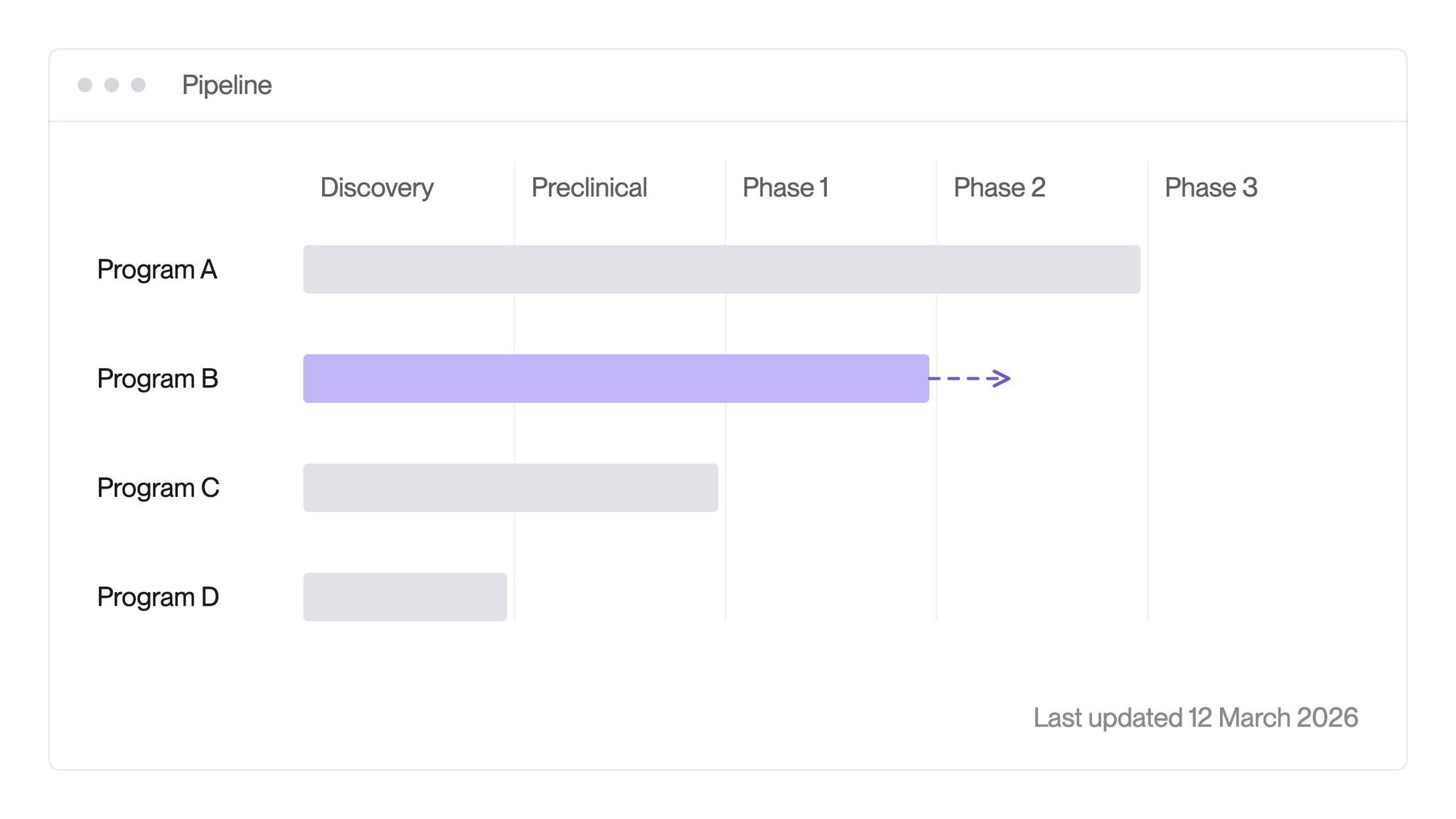
The pipeline page is the overview of the company's drug programs: what each one is, what it treats and which stage of development it has reached. Investors usually open it first, so it has to show the new phase on the morning of the announcement. A week later is too late. That is easy when the pipeline is data and hard when it is a picture someone exported from a slide 2 years ago.
Build it as a separate entry for each program, with the same fields every time: name or code, modality, target, indication, phase and the next milestone. Moving a program into Phase 2 then becomes a single change in a single field. Put a "last updated" date on the page and use the same wording as the press release and the trial registry. Investors read all of them, and a mismatch becomes a question on the next call.
Before a raise, this is where diligence starts. Investors want to know who runs the company, who sits on the board and who has already put money in, and they want to be able to check it. Biographies with previous companies and roles do that better than adjectives do.
When the round closes, the new investors and board members should appear on the website the day it is announced. Change the deck at the same time, so the deck and the website never describe different versions of the company.
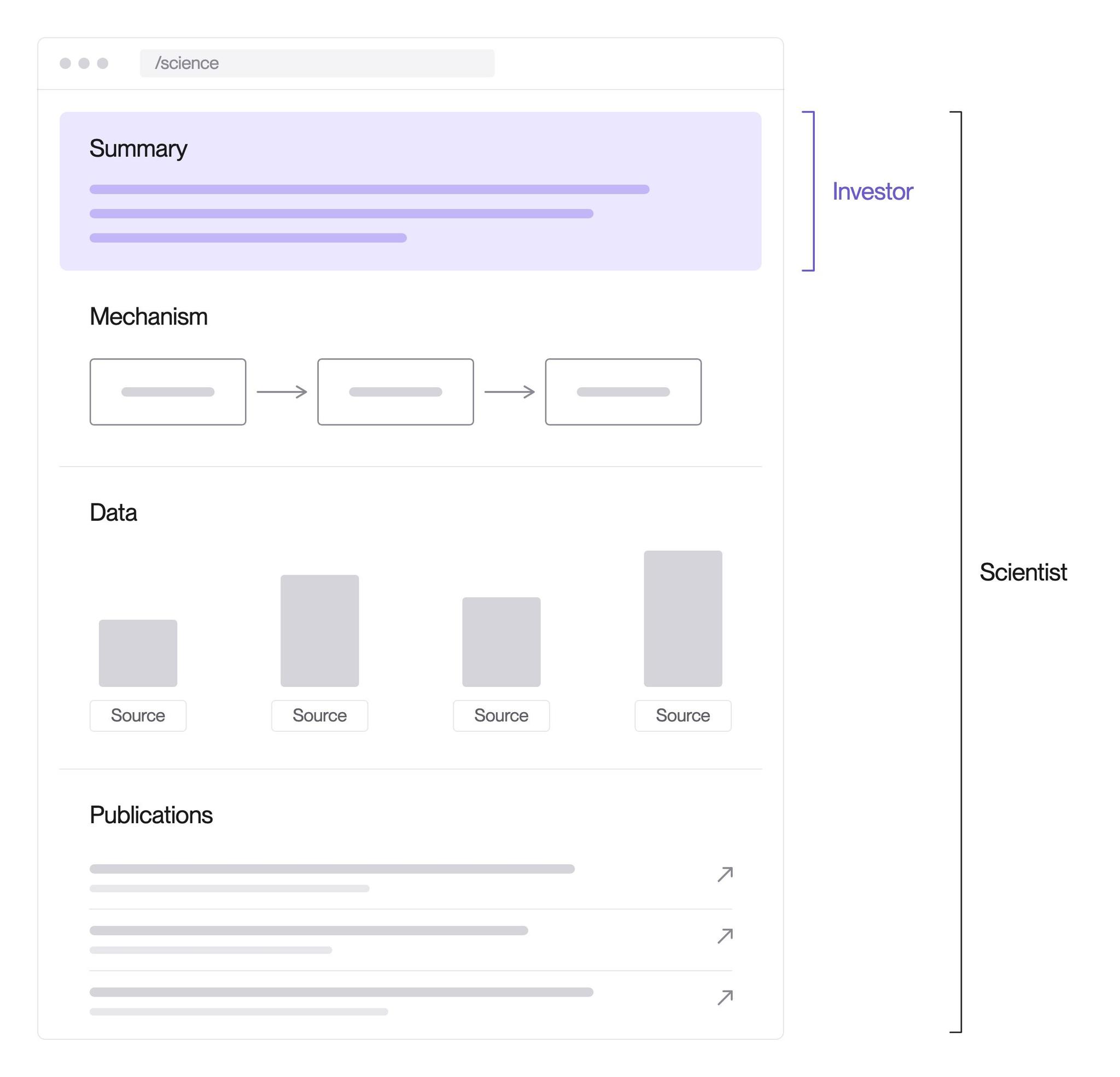
The science pages have 2 readers who want opposite things. The scientist wants the mechanism, the data and the source of every figure, and will notice a vague claim within a paragraph. The investor wants to understand what the company does in under a minute.
One page can serve both if you layer it. Open with 2 or 3 plain sentences about the target, the mechanism and the patients. Then give the scientist everything: the diagram, the data with its sources and the publications with links.
We built In Physico's website this way. Before designing anything, we mapped the technology, the applications and the evidence, so researchers, investors and partners each have their own way into the same science.
On announcement day the communications team will want to publish the release, move the pipeline, change the homepage and add the news to the investor page, all within an hour of the release going out. If any of that needs a ticket to an agency, the website is a day behind the news on the one day it matters.
The answer is in how the content is built. When news is a collection of entries, each with a title, a date, a type and a body, the release can sit as a draft for a week and go live with a single click. Publish the release as a page on the website and attach the PDF to it. A page reads properly on a phone, shows a real title when someone shares it on LinkedIn, and can be found by search engines and AI assistants, which a PDF on its own does poorly.
Keep the old releases too, with their dates. A news archive is a record of what the company said and when, and investors do read it.
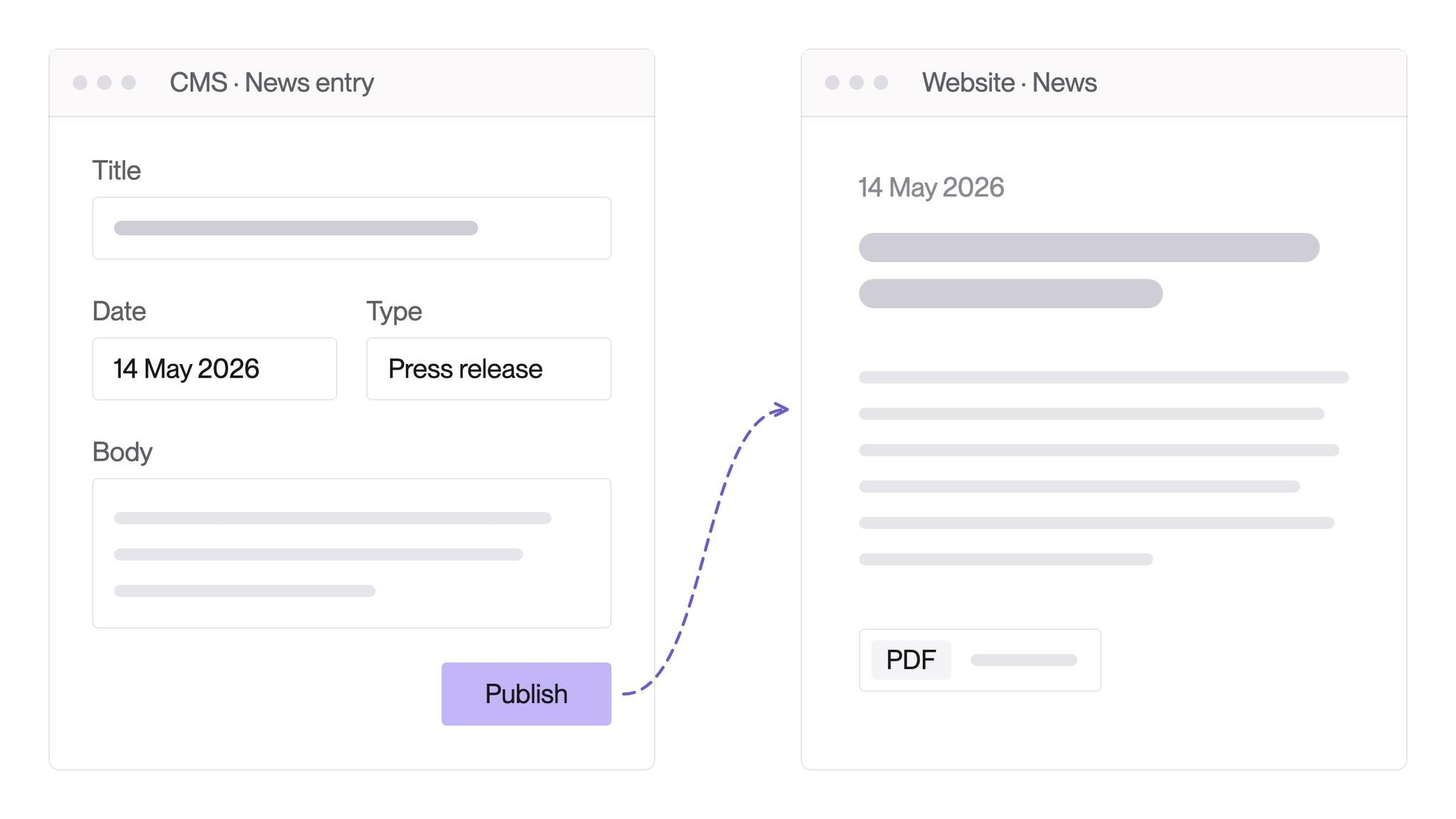
RoukenBio's marketing team works like this. They build pages and publish scientific articles without a developer, on a website we built with Next.js and Strapi. Webflow, WordPress and other platforms can do the same, as long as the pipeline, the news and the publications are content the team can edit.
Do the unglamorous checks a week before the announcement, on the live website, while there is still time to fix what breaks.
Start from the announcement and count backwards. A redesign needs about 8 weeks. An update needs about 4.
In a redesign, the first 2 weeks go to agreeing the story and who approves the wording, the content is written while the design comes together, and the build moves to a staging website 4 weeks out. An update starts 4 weeks out, with a list of the pages the milestone changes and new text for each of them.
From 2 weeks out, both look the same. Run the checks and fix what fails. A week before the announcement, have the release page and the pipeline change ready as unpublished drafts, and agree on the person who will publish them. In the week after, watch which pages people read and answer the inquiries that come in.
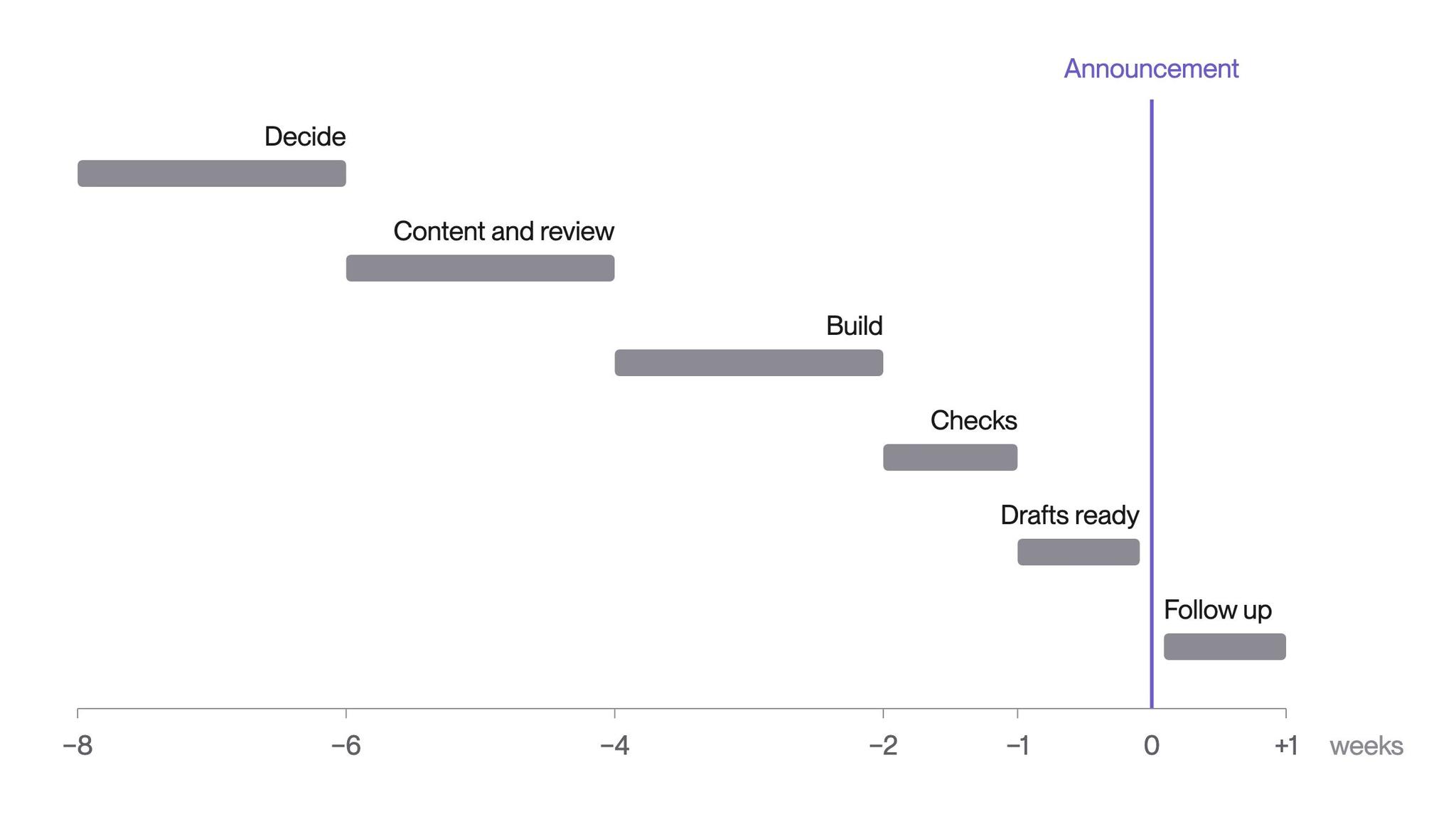
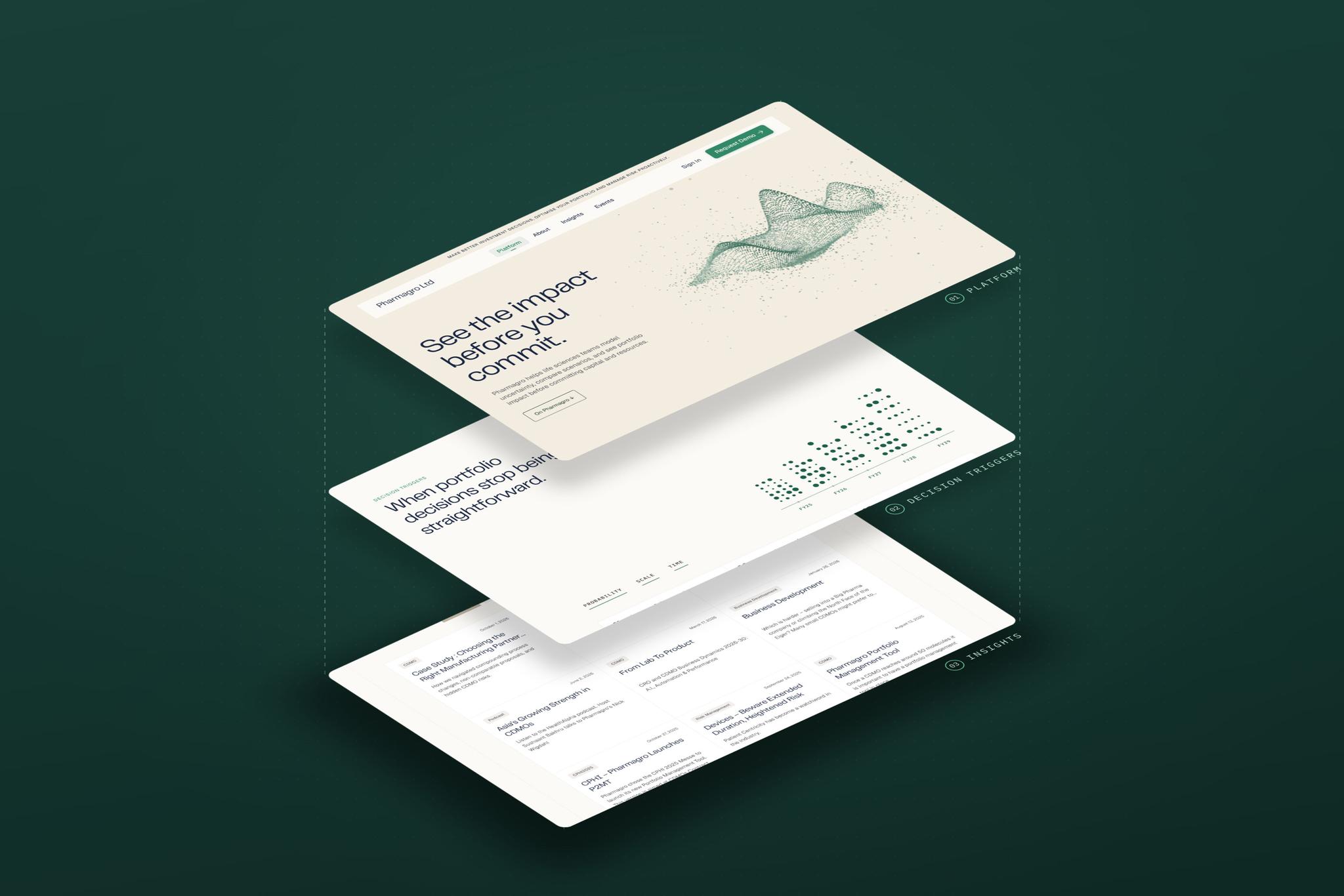
A redesign can be faster when decisions are quick. We designed and built Pharmagro's website in 6 weeks and launched it on 5 October 2026, in time for CPHI. The date could not move, so everything else had to.
Funding round or milestone coming up?
We design and build biotech websites ahead of funding rounds and clinical milestones, so the website matches the deck on the day of the news.
Book a call about your websiteWhere to start before your next milestone
Before your next raise or clinical milestone, open the latest deck and the website side by side and read them the way an investor would. Note every place they disagree. If the differences are in the text, you need an update, and 4 weeks is enough. If the website tells a story the company has outgrown, you need a redesign, and 8 weeks is safer. Either way, make sure the people who write the press release can also publish it.
If you want a second opinion on your website before the news, book a call with us. You can also see how we approach biotech website design.